
- The short answer on AI image generators:
- Why does "commercial use allowed" not mean what you think?
- Is your work being used to train the model?
- Where does your data actually live, and is there a DPA?
- What do they actually cost?
- Adobe Firefly
- Black Forest Labs (FLUX)
- Leonardo.Ai
- Recraft
- Ideogram
- Midjourney
- What none of these tools give you
- So which one should you use?
- Frequently asked questions
- What is SVG, and why does it matter?
- Can a European business use AI-generated images commercially?
- Do I own the copyright in an AI-generated image?
- Which of these is safest for GDPR?
- Do these tools train their models on my prompts and images?
- Is a free tier ever safe for business use?
- Do I have to label AI-generated images under the EU AI Act?
- What is IP indemnification, and do I need it?
- Can I run an AI image generator on my own EU infrastructure?
- Why is everything priced in dollars?
- How we scored this
- Sources
Researched 12 August 2026. Prices, terms and licence versions verified live on that date. Two of the six tools below were tested hands on.
Most comparisons of AI image generators rank them by how the pictures look. That is the wrong first question for a European business.
If you are generating images for a client campaign, a product page or a brand kit, two things decide whether the tool is usable at all, and neither of them is image quality. The first is whether you actually own the output and on which plan. The second is whether your prompts and your generated images are being fed back into the vendor’s training data by default.
Get those wrong and you have a legal problem that no amount of aesthetic quality fixes. Get them right and the quality question becomes a genuine choice rather than a gamble.
This guide covers Adobe Firefly, Black Forest Labs (FLUX), Leonardo.Ai, Recraft, Ideogram and Midjourney, judged on commercial rights, training data, GDPR posture and price, in that order.
A note on currency, once. Every tool here bills in US dollars and none publishes euro pricing. Euro figures below are approximate, calculated at roughly 1 USD to 0.92 EUR, and your actual cost moves with the exchange rate. Check the live rate before budgeting.
The short answer on AI image generators:
If legal certainty is the binding constraint: Adobe Firefly. It is the only tool here that trains exclusively on licensed content, guarantees in its contract that it will not train on yours, and offers IP indemnification. No competitor matches that combination.
If you want an EU-native vendor: Black Forest Labs. BFL GmbH in Freiburg is the only genuine EU data controller in this group, which removes the cross-border transfer question entirely. The catch is that its training default is the most aggressive of any paid tool here.
If you need editable vector output: Recraft. Native SVG is a real capability gap that nothing else on this list fills.
If you need legible text inside the image: Ideogram. Still the best at it, and the only tool that grants commercial rights on its free tier. Its GDPR paperwork is the weakest here.
If you need custom-trained models for campaign consistency: Leonardo.Ai. Fine-tuning on your own images at this price point is genuinely differentiated. Never on the free plan.
If aesthetic quality outranks everything: Midjourney. It produces the best-looking images in the category and it is the hardest to recommend to a European business for commercial production. The reasons are below and they are not small.
Why does “commercial use allowed” not mean what you think?
The phrase hides three separate questions, and vendors answer them differently.
Do you own the output, or merely have permission to use it? These are not the same. Recraft and Ideogram assign copyright to you outright, which is the strongest position available. Adobe confirms you retain all rights in your content and claims no ownership. Midjourney says you own your assets, then takes a permanent licence back over them. Leonardo, on its free plan, claims ownership of the output for itself at the moment of creation.
Which plan unlocks it? Commercial rights are a paywall feature almost everywhere. Ideogram is the exception, granting them on the free tier. Recraft bans commercial use on free entirely and owns those images. Leonardo’s free tier is worse still. Midjourney adds a revenue condition on top: any company, or employee of a company, turning over more than 1,000,000 USD a year has to be on Pro or Mega to own its assets, regardless of how much it generates.
What happens if the output infringes someone else’s copyright? This is where the field separates sharply. Adobe offers indemnification on qualifying plans. Recraft, Ideogram, Leonardo and BFL offer none, leaving the risk with you. Midjourney goes further and requires you to indemnify Midjourney against claims arising from your content. You take the risk and you cover theirs.
Is your work being used to train the model?
By default, at four of the six, yes.
| Tool | Trains on your content by default | Opt out |
|---|---|---|
| Adobe Firefly | No, by contract | Not needed. Product improvement training is opt in |
| Recraft | Yes | Yes, in account settings |
| Black Forest Labs | Yes | Yes, by email. Prospective only |
| Ideogram | Yes | No documented mechanism |
| Leonardo.Ai | Yes on free and on public content | Paid plus private mode is protected by contract |
| Midjourney | Yes | No documented mechanism |
Adobe is the outlier and deserves the credit. Its terms state plainly that its licence to your content does not extend to training generative models on it, with a carve out only for material you have submitted to Adobe Stock. That is a contractual guarantee rather than a setting you can forget to change.
Two entries in that table need a warning label. BFL’s opt out works going forward only: content already absorbed into a training run stays there. So it is a day one account action, not something to get round to. And Leonardo’s protection depends on generating in private mode, because content marked public falls under the same broad training licence on a paid plan as it does on a free one.
Ideogram and Midjourney document no opt out at all. Under GDPR you retain the right to object where processing rests on legitimate interests, which is the basis Ideogram cites, but neither vendor publishes a route to exercise it.
Where does your data actually live, and is there a DPA?
| Tool | Controller entity | DPA published | EU AI Act transparency |
|---|---|---|---|
| Adobe Firefly | Adobe Systems Software Ireland Ltd | Yes, plus DORA addendum | Content Credentials on all outputs |
| Black Forest Labs | BFL GmbH, Freiburg, Germany | No | Training data summary published |
| Leonardo.Ai | Leonardo Interactive Pty Ltd, Australia | Yes, with 2021 SCCs | Not published |
| Recraft | US, San Francisco | Yes, SCCs and Irish law | Not published |
| Ideogram | Canada, Toronto | No | Not published |
| Midjourney | Midjourney Inc, US | No | Not published |
Three points worth pulling out of that table.
BFL is the only vendor here where an EEA business is not making a cross-border transfer. BFL GmbH is a German company that is the named controller for EEA, Swiss and UK users, with a named Data Protection Officer. That is structurally cleaner than Adobe’s Irish entity, and much cleaner than the US and Australian options. It also holds ISO 27001:2022 and SOC 2 Type II.
The offsetting problem is that BFL publishes no standalone DPA. If your procurement requires a countersigned DPA before anything touches personal data, and most mid-sized European organisations do, that is a negotiation rather than a download. Leonardo and Adobe both hand you one immediately.
Leonardo’s Australian controller is an under-discussed middle case. Australia has no EU adequacy decision, so Standard Contractual Clauses are mandatory rather than a nicety, and Leonardo has them in place. But Australia is also outside the reach of the US CLOUD Act, so the specific extraterritorial access concern we set out in our ChatGPT GDPR guide does not apply in the same form. That is a real distinction, though not on its own a sovereignty advantage.
BFL is the only one making a visible EU AI Act effort. Its transparency hub publishes a training data summary for FLUX 3 using the EU AI Office template under Article 53(1)(d), with model documentation available on request. If the August 2026 obligations are on your compliance calendar, that matters. Adobe’s Content Credentials serve a different transparency purpose, marking outputs as AI generated at the file level.
For the broader picture on where AI vendors actually host European data, see our guide to AI tools with EU data residency.
What do they actually cost?
Headline prices are misleading in this category, because the cheapest plan and the cheapest usable plan are rarely the same thing. The columns that matter are the last two.
| Tool | Free tier | Entry paid plan | Cheapest plan with commercial rights | Cheapest plan with private generation |
|---|---|---|---|---|
| Adobe Firefly | Yes, daily credits | 9.99 USD, approx 9 EUR | 9.99 USD, approx 9 EUR | Private by default |
| Black Forest Labs | No, 5 USD starter credit | Metered, from 0.014 USD an image | API or Apache 2.0 weights | Free if self-hosted |
| Leonardo.Ai | Yes, not usable commercially | 12 USD, approx 11 EUR | 12 USD, approx 11 EUR | 12 USD, approx 11 EUR |
| Recraft | Yes, not usable commercially | 12 USD, approx 11 EUR | 12 USD, approx 11 EUR | 12 USD, approx 11 EUR |
| Ideogram | Yes, commercial use allowed | 20 USD, approx 18 EUR | Free tier | Not documented |
| Midjourney | No | 10 USD, approx 9 EUR | 10 USD, approx 9 EUR | 60 USD, approx 55 EUR |
Full tier ladders, in USD per month on monthly billing:
| Tool | Tiers |
|---|---|
| Adobe Firefly | Standard 9.99, Pro 19.99, Pro Plus 49.99, Premium 199.99 |
| Black Forest Labs | Metered only, 0.014 to 0.08 an image, self-hosted licences on request |
| Leonardo.Ai | Essential 12, Premium and Ultimate to 60 |
| Recraft | Basic 12, Pro 20, Teams 22 a seat, three-seat minimum |
| Ideogram | Plus 20, Pro 60, Team 30 a user |
| Midjourney | Basic 10, Standard 30, Pro 60, Mega 120 |
Three things the table makes visible.
Midjourney is six times more expensive than it looks if you need confidentiality. The 10 USD entry plan gives you commercial rights and publishes everything you make. Private generation starts at 60 USD, and that is the real price of using it for client work.
Ideogram is the only genuinely free commercial option in the group. Whether that is a bargain depends on how much your compliance team cares about the missing DPA.
BFL is the cheapest at volume and the only one that can reach zero. Metered pricing with no subscription suits spiky workloads, and self-hosting Apache 2.0 weights removes the per-image cost entirely, leaving only your own compute.
Annual billing takes roughly 20 percent off at Adobe, Leonardo, Recraft, Ideogram and Midjourney, paid upfront for the year. Adobe’s promotional rates on Pro Plus and Premium expire on 26 August 2026.
Adobe Firefly
Verdict: the safest commercial choice, and it is not close. Qualitative assessment, not hands on tested.
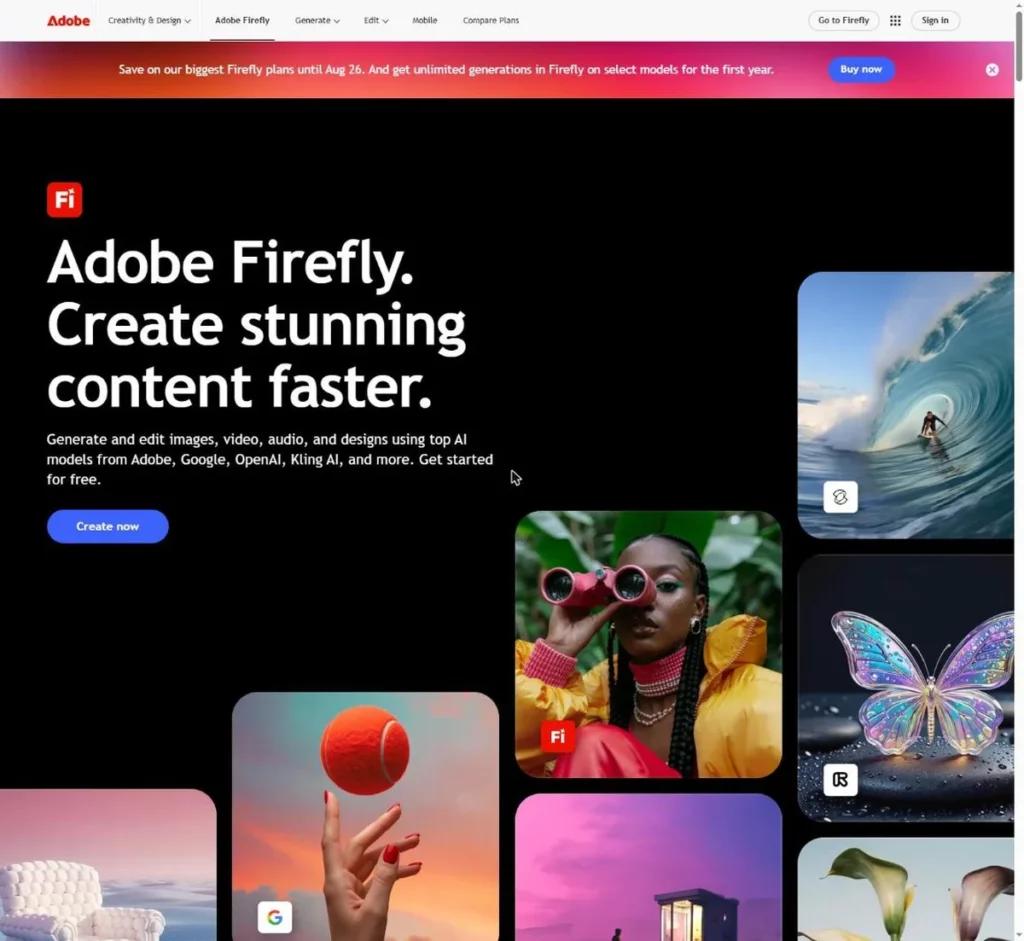
Firefly is the generative layer across Creative Cloud and a standalone web app that has become a multi-model hub, offering Google, OpenAI, Kling, Luma and FLUX models alongside Adobe’s own Firefly Image 4.
Adobe states it trains only on content it has permission or rights to use, principally Adobe Stock and other licensed material. It confirms in its terms that it does not train generative models on your content or your customers’ content. You retain ownership. And it offers IP indemnification on qualifying plans, which no other vendor in this comparison does. The GDPR paperwork is complete: a downloadable DPA, a DORA addendum for financial sector customers, and Adobe Ireland as the EU controller with the Irish DPC as lead supervisory authority.
The trap that undercuts all of it. Firefly is now a marketplace, and the protection attaches to the model, not the app. Adobe’s own product documentation excludes capabilities powered by non-Adobe-trained models from Firefly IP indemnification.
In practice: switching model in the picker can move you outside the protection you are paying for, without any warning in the interface. If indemnification is why you chose Firefly, generate on Adobe models and document which model produced which asset.
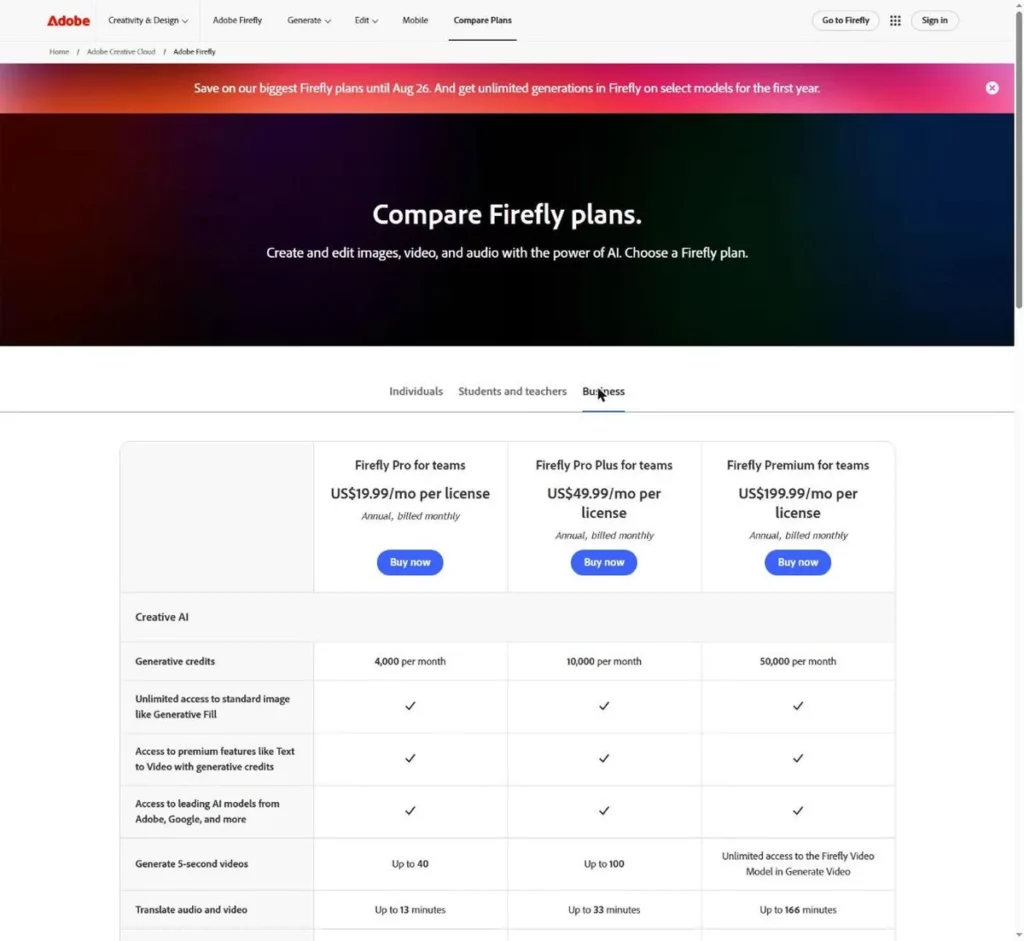
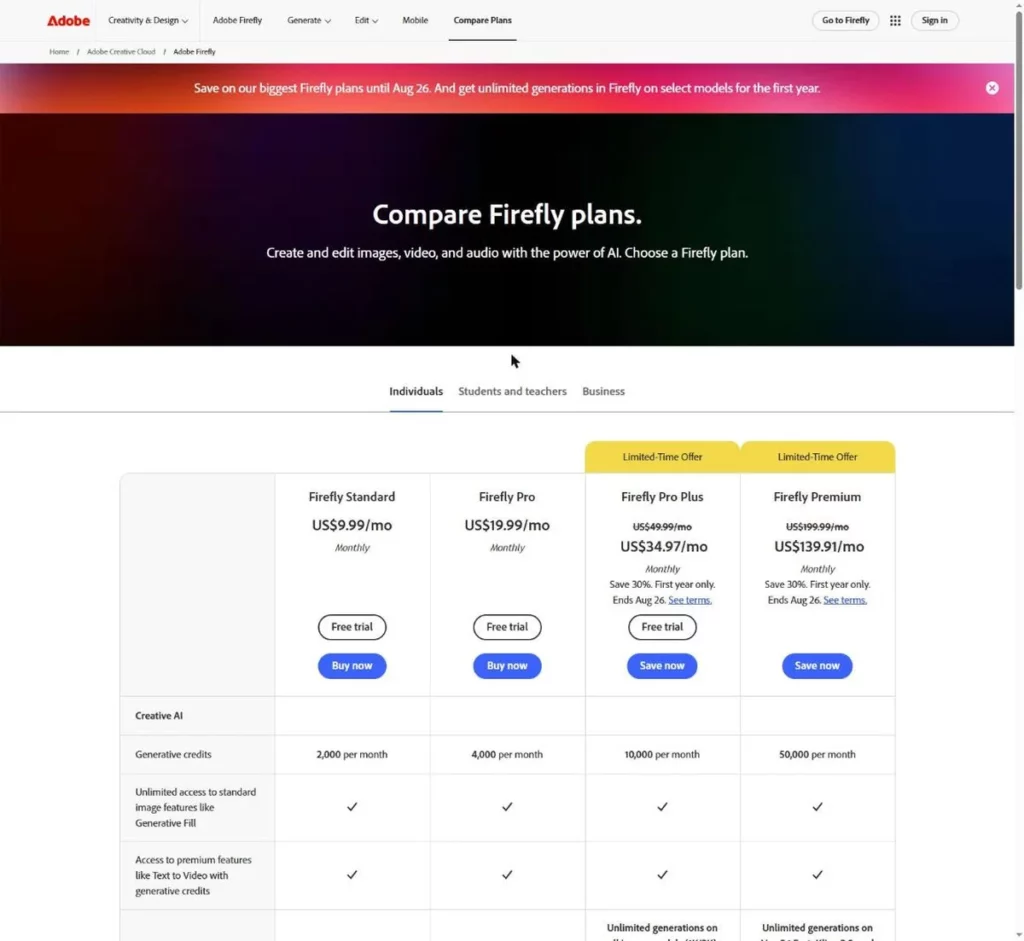
Pricing. Free tier with daily credits. Standard 9.99 USD a month for 2,000 credits, Pro 19.99 for 4,000, Pro Plus 49.99 for 10,000, Premium 199.99 for 50,000. Team equivalents at the Pro tier and above. Promotional prices on Pro Plus and Premium expire 26 August 2026, after which the regular rates apply. No EUR pricing is published.
Business pricing:
Individual pricing:
Why you might not buy it. No native vector output. Physical processing is in US data centres even though the controller is Irish, so this is legally covered rather than EU hosted. If you do not need Photoshop web or Express, some of what you pay for goes unused. And “qualifying plans” is doing a lot of work in the indemnification language, so get your specific plan confirmed in writing before relying on it.
Black Forest Labs (FLUX)
Verdict: the strongest EU structural position, paired with the weakest training default of any paid tool here. Qualitative assessment, not hands on tested.
BFL was founded in Freiburg in August 2024 by former Stability AI researchers, and its FLUX models sit inside Adobe, Canva, Microsoft and Leonardo among others. Image quality is at the frontier, prompt adherence is excellent, and FLUX.1 Kontext’s in-context editing, where you make iterative regional changes while keeping a character or product consistent, is a real production capability.
Get the licensing right, because most published guides do not. FLUX.1 [schnell] and FLUX.2 [klein] 4B are Apache 2.0, which means you can self-host them commercially with no licence fee and no per-image cost. FLUX.2 [klein] 9B and the [dev] checkpoints are under the FLUX Non-Commercial Licence, which is a different thing entirely. Self-hosting those for business requires a paid weights licence through the Builder, Platform, Professional or Enterprise tiers, none of which publish prices. Outputs generated through the paid API carry full commercial rights. The website Playground is not the correct route for commercial work under the terms.
So the “frontier quality, self-hosted, free, fully commercial” proposition is real but it lives at 4B specifically. That is still a genuinely distinct offer that Adobe, Midjourney, Leonardo, Recraft and Ideogram cannot match, and for a team with the infrastructure to run it, no prompt or image ever leaves your own hardware. That is the strongest data residency answer available anywhere in this category.
The training default. The terms grant BFL a perpetual licence to train on your inputs and outputs. Opting out means emailing them, and the opt out is prospective only. Anything already used in training stays used. Treat it as the first thing you do after creating an account, not a housekeeping item.
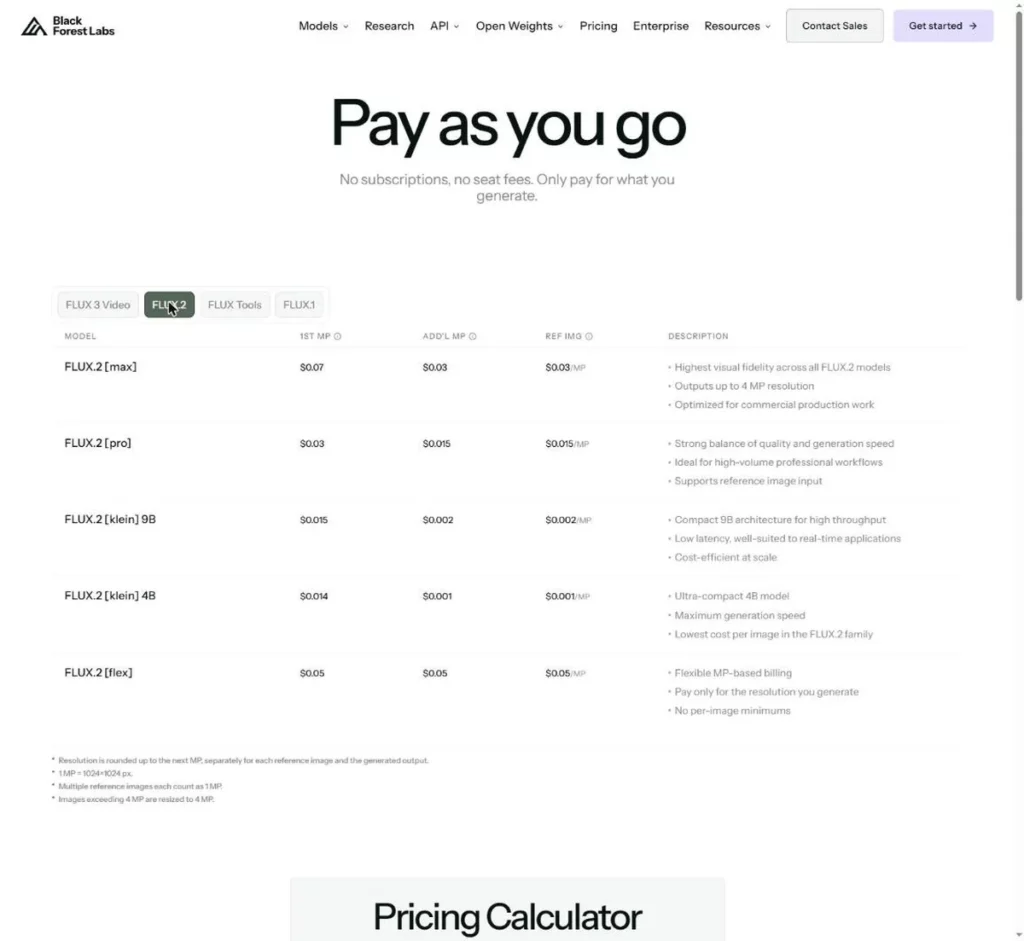
Pricing. Pure metered API with no subscription: roughly 0.014 USD an image on klein 4B up to 0.08 on Kontext [max], with video priced per second. A 5 USD non-expiring startup credit. Self-hosted commercial tiers are contact sales.
Why you might not buy it. No published DPA, no IP indemnification, no DORA addendum, and no licensed-training-data guarantee equivalent to Adobe’s. The website terms are governed by Delaware law despite the German controller, which is worth flagging in any enterprise negotiation. If you need plug-and-play legal safety on day one, this is not it.
Leonardo.Ai
Verdict: good creative tooling, workable compliance, one genuinely dangerous free tier. Qualitative assessment, not hands on tested.
Founded in Sydney in 2022, acquired by Canva in July 2024, now operating as a Canva brand. Its distinguishing capability is custom model training: fine-tune on ten to twenty images and generate consistent characters, products or styles across a whole campaign. Nothing else at this price does that as well. The Canvas editor, with inpainting and outpainting in one workspace, suits iterative production rather than one-shot generation.
Do not use the free plan for anything commercial. Under the terms, intellectual property in outputs created by free subscribers vests in Leonardo on creation. That is a stronger claim than any other vendor here makes, Midjourney included. Free content is also public by default and covered by an irrevocable perpetual licence for training and commercial use.
Paid changes it completely. From Essential upward, ownership vests in you, and private content is contractually protected from training without your express written consent, wording repeated in the enterprise Master Services Agreement. The condition is that you generate in private mode, because public content on a paid plan falls back under the broad licence.
Compliance. A published DPA with 2021 edition SCCs, a UK addendum, AES-256 at rest, TLS in transit, annual penetration testing, SOC 2 Type I and II, and a named European DPO. That is ahead of Recraft and Ideogram. Behind it: no EU controller entity, no documented training data provenance, no IP indemnification, and an explicit disclaimer of liability for infringement.
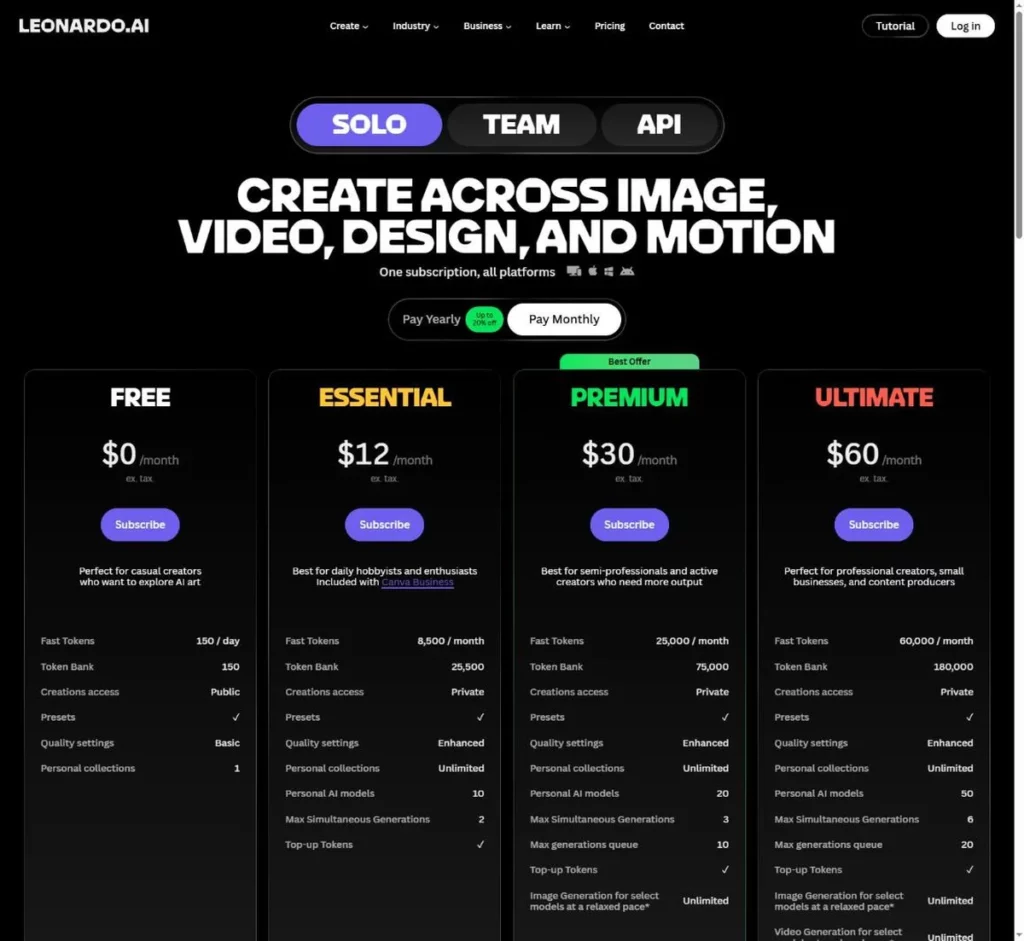
Solo pricing:
Team pricing:
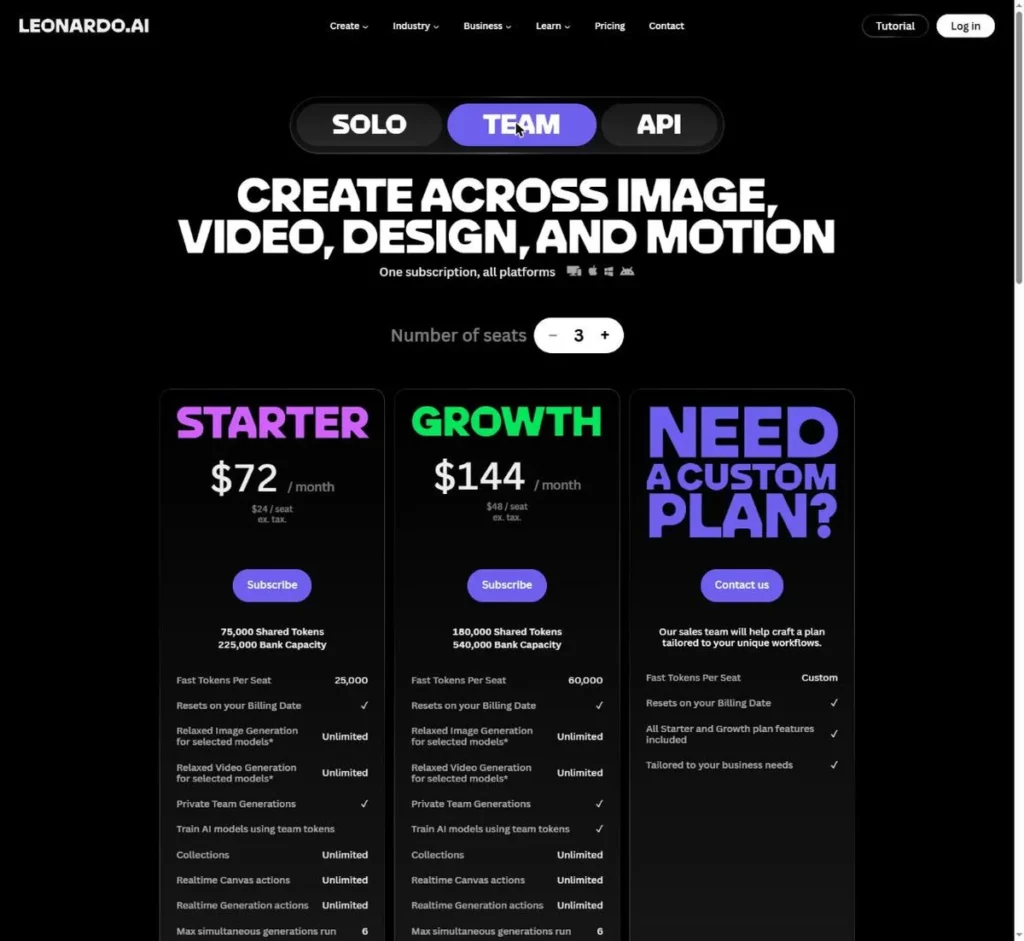
Pricing. Essential 12 USD a month, rising through Premium and Ultimate at 60 USD, with roughly 20 percent off annual. Included with Canva Business at the Essential level. USD only.
Why you might not buy it. The ownership model has four moving parts, free versus paid and public versus private, and getting any of them wrong has consequences. The Canva acquisition also means the operational licence over private content is sublicensable within the group, so Canva can access it even though the training prohibition holds.
Recraft
Sovereignty 5/10 | Usability 8/10. Tested hands on.
Recraft is the tool I have used most, and the reason is native SVG. You get back a genuinely editable vector file rather than a raster you then have to trace. For logos, icons and brand assets that is not a marginal convenience, it is the difference between usable and not.
The workflow is the other reason. Instead of a gallery of past generations, Recraft gives you an infinite canvas where every output is a moveable object you can arrange, scale and compare side by side. If you have used Figma or Miro the model is immediately familiar. It looks more complicated than Midjourney for about five minutes and then it stops looking complicated, because seeing twelve variations at once is how design work actually happens.
What the testing looked like. The logo on our Nordic sister site came out of Recraft, six concepts on the canvas within minutes of opening the tool, faster than briefing a freelancer. To push it further I generated branding for a fictional law firm, black background, white type, expensive-looking. Two usable concepts appeared in seconds, refinement happened on the same canvas rather than starting a new prompt each time, and then the right-click menu did the rest: resize to 2400 by 2400, Omni upscale, remove background, vectorize, modify region, convert to mockup. That last part is what separates Recraft from an image generator. It is a design toolkit that happens to start with a prompt.
It is also a multi-model hub. You can run the same prompt through Recraft V1, V2 and V4.1 plus GPT Image, Ideogram, Nano Banana and Midjourney through API integrations, without leaving the canvas. For comparison work that saves real time, though note that outputs from those third-party models sit under those vendors’ terms, not Recraft’s.
Rights. On paid plans Recraft assigns you its copyright in the assets, which is ownership rather than permission, and images are private by default. The free tier is the exact opposite: Recraft owns what you generate, commercial use is banned outright, and your images sit publicly in the community gallery. Do not test client concepts on it.
Sovereignty 5/10 reflects a real DPA with SCCs under Irish law and a published sub-processor list, offset by US infrastructure across AWS, Azure and Google Cloud with no EU hosting option, training data that is never disclosed, no indemnity, and a training default that is opt out rather than opt in. The opt out is at least a visible toggle in account settings, which puts it ahead of Ideogram and Midjourney.
Usability 8/10 is high because the canvas workflow, the vector pipeline and the in-canvas editing all work as advertised, and you can get professional output without reading documentation. It is not higher because subscription credits expire monthly with no rollover, different generation types burn credits at different rates so budgeting is guesswork, refunds are tightly restricted, and support is the most common complaint in third-party reviews.
Pricing. Basic 12 USD a month, roughly 11 euro. Pro 20 USD, roughly 18 euro. Teams 22 USD a seat with a three-seat minimum. Around 20 percent off annually. VAT is added at checkout, which the pricing page states explicitly.
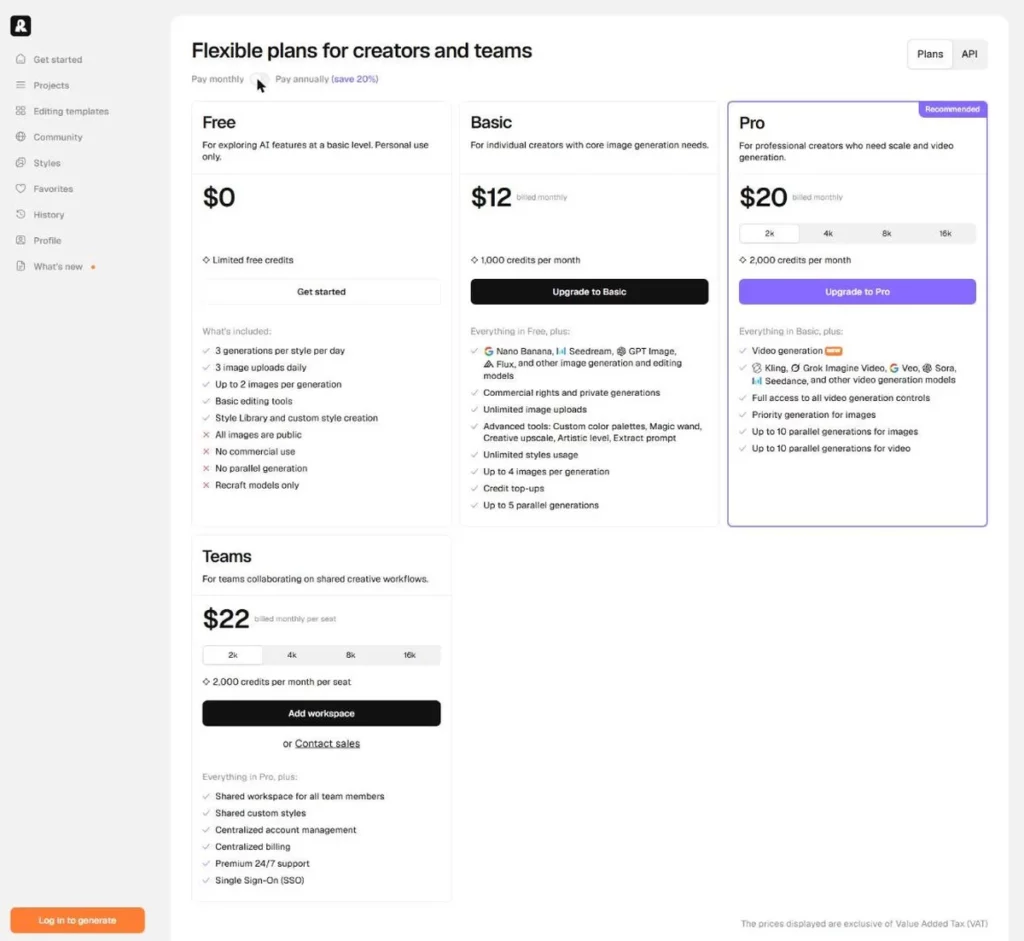
One thing to watch, and it is the reason I nearly overpaid: the pricing page defaults to showing the annual rate expressed as a monthly figure. The genuine monthly option exists but it is smaller and less prominent. Check the billing toggle before you click subscribe. Plenty of SaaS companies do this now, which does not make it honest.
Why you might not buy it. Undisclosed training data plus no indemnity is unquantified IP exposure, and if that is your main concern Adobe answers it and Recraft does not. Recraft’s terms were also revised on 11 August 2026, with existing European accounts moving onto them from 25 August 2026, so check what changed if you already subscribe.
Ideogram
Verdict: the most commercially generous terms and the thinnest compliance paperwork. Qualitative assessment, not hands on tested.
Built in Toronto by former Google Brain researchers, Ideogram was the first generator to reliably render legible, correctly spelled text inside images, and version 4.0 still leads there. For posters, social graphics and anything typographic it is the obvious pick.
The rights position is the best in this comparison. Ideogram claims no ownership of your input or output, does not restrict commercial use, and assigns you any rights it might acquire. That applies on every plan including the free one, which no other vendor here offers. The honest caveat Ideogram itself raises is that outputs are not unique: the same prompt can produce the same image for someone else, so you own the rights without exclusivity.
The compliance side is where it falls down. Ideogram uses prompts and generated images to train its models on a legitimate interests basis, with no documented opt out mechanism anywhere on the site. There is no published DPA. For a European business handling any personal data through the tool, GDPR Article 28 expects a processor agreement, and there is none to sign. Training data provenance is undisclosed and no indemnity is offered.
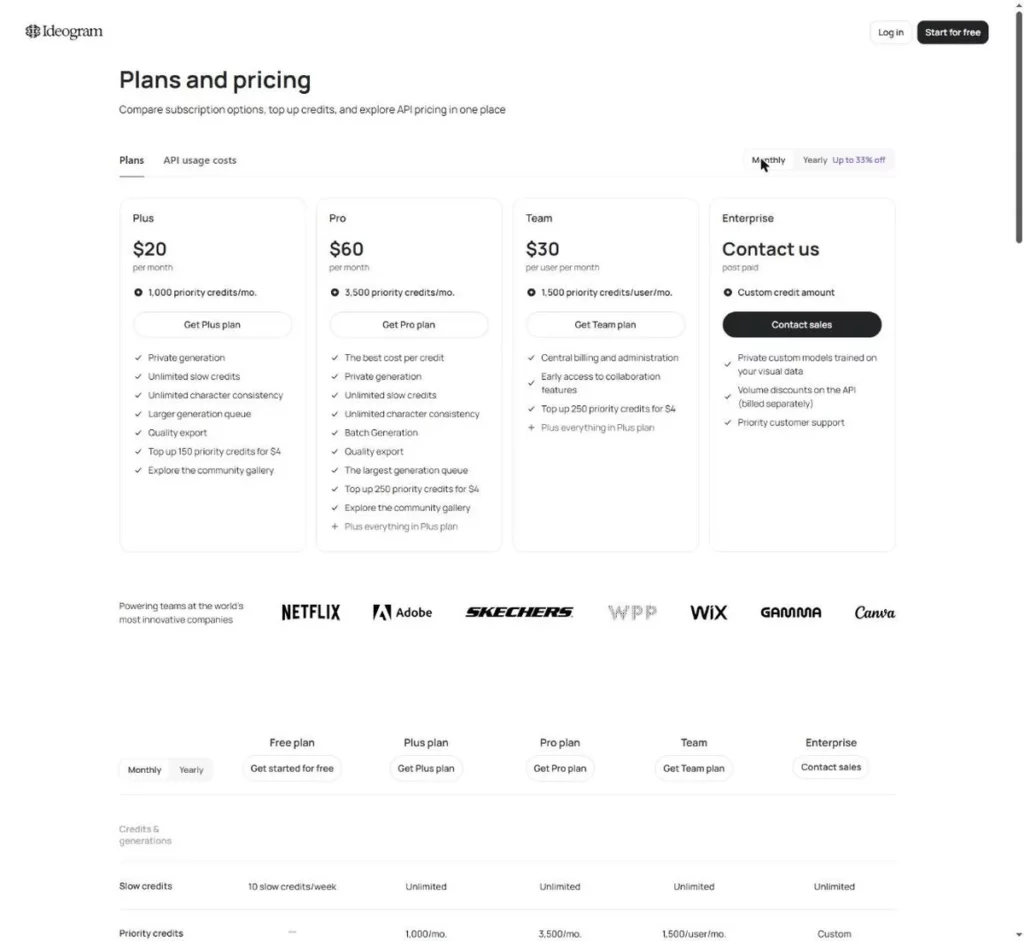
Pricing. Free tier with 10 slow credits a week. Plus 20 USD a month or 15 on annual, Pro 60 or 42 annual, Team 30 a user or 20 on annual. Priority credit top-ups sold separately. USD only, VAT treatment not stated.
Why you might not buy it. If procurement needs a signed DPA, the conversation ends immediately. The governing terms also date from August 2024 with a January 2025 privacy policy, which is old for this market and worth re-checking before you commit.
Midjourney
Sovereignty 2/10 | Usability 7/10. Tested hands on.
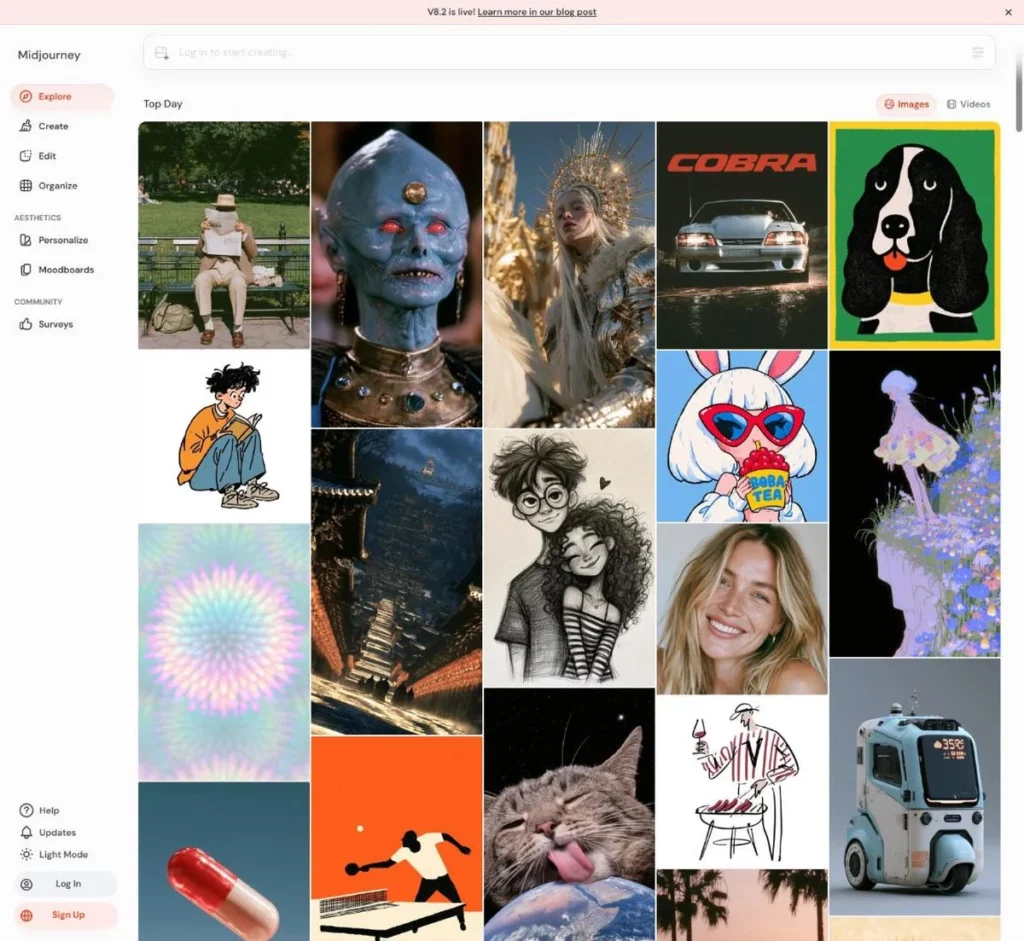
Midjourney makes the best-looking images in the category and I do not think that is seriously disputed. What it is actually selling is artistic coherence: anatomy, lighting logic and visual style hold together across dozens of images in the same campaign. Free tools do not do that. If your output is judged on how it looks, this is the tool.
For a European business doing commercial production it is also the hardest to justify, and the reasons stack.
Active litigation over training data. Disney and Universal filed in the Central District of California on 11 June 2025, alongside DreamWorks, alleging that Midjourney trained on their copyrighted characters. Warner Bros. Discovery filed separately on 4 September 2025 and the cases were consolidated with the Disney action as lead. A scheduling order was entered on 14 November 2025, with expert disclosures running through October and November 2026. Midjourney is arguing fair use and in mid-2026 moved to compel the studios to disclose their own AI use. Nothing is settled or decided, and the training corpus has never been published.
You own your outputs, and Midjourney keeps a permanent licence over them. The terms say you own your assets to the fullest extent possible, then grant Midjourney a licence described as perpetual, sublicensable and irrevocable over both your inputs and your generated assets. It survives cancellation. Set that against Recraft’s or Ideogram’s outright assignment and the difference is stark.
The indemnity runs backwards. Midjourney does not protect you against third-party copyright claims. Its terms require you to indemnify Midjourney against claims relating to your content.
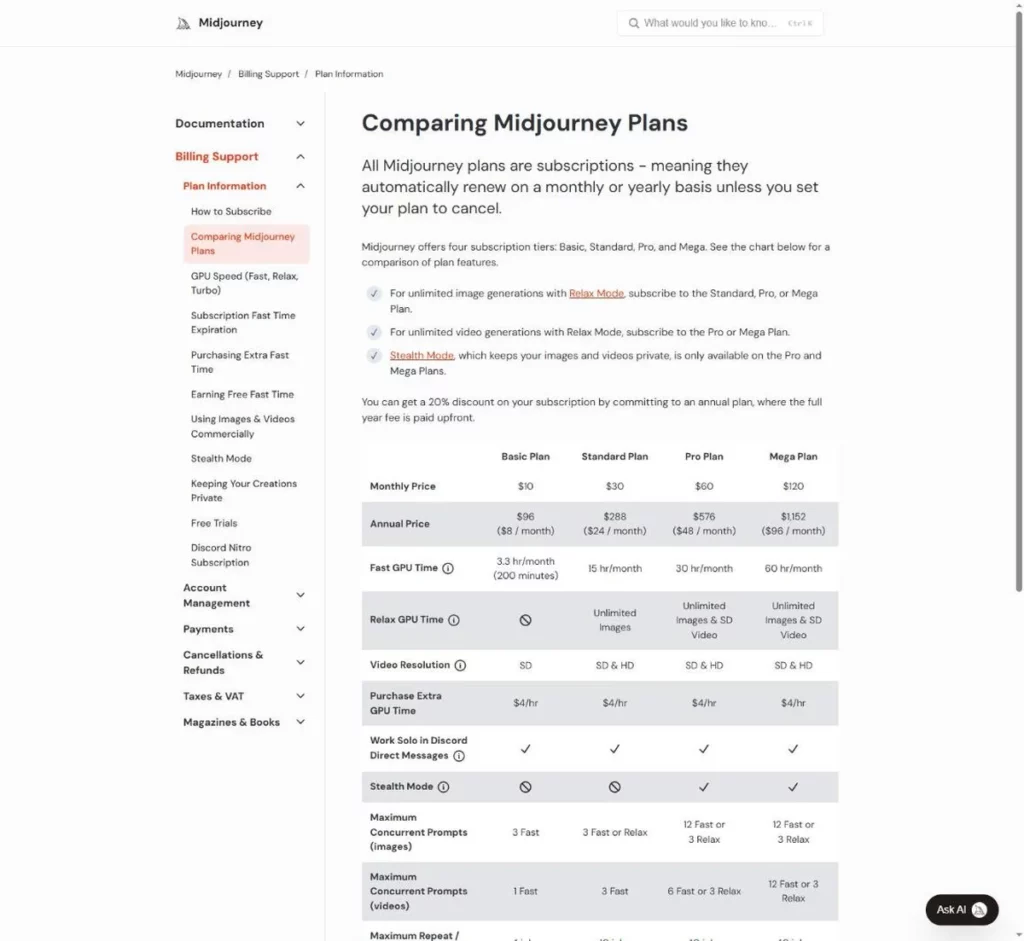
Everything is public unless you pay for Pro. This is the finding that matters most in practice and the one people discover too late. Content is publicly viewable and remixable by default, browsable by anyone without logging in. Stealth mode is available on Pro and Mega only, so a Standard subscriber has every piece of client work on display. Stealth also does not cover images generated in shared Discord servers, and it does not stop Midjourney processing the content. If you are developing brand identity or unreleased campaign material, this is a professional blocker rather than a privacy preference, and it needs to go into the budget from the start.
Two practical findings from using it. First, write your prompts in English. Finnish prompts work for simple descriptions, but the moment you want precise control over lighting, composition or style, English produces measurably more consistent results, because that is what the model was trained on. The workable habit is to think the prompt in your own language, translate it, then append the technical vocabulary in English. Second, the Discord-only reputation is out of date. The web interface at midjourney.com is now the primary route, with generation, library and project organisation all in the browser. Discord is still a good community for prompt technique and nothing more.
Where it genuinely pays for itself. A marketing team running two to four campaigns a month against a stock photo bill of 150 to 300 euro is the clearest case, and Relax mode on Standard makes generation effectively unlimited if you can wait a few minutes per image. The sensible pattern for agencies is two-tier: concept and moodboard on Standard, then move to Pro before anything is client-facing or published.
Sovereignty 2/10 reflects US hosting with no EU data centres, no DPA, no documented training opt out, no EU entity, no published data centre information, and public-by-default content. Usability 7/10 is still respectable: the web app is polished, quality is high even from simple prompts, and video generation is included on the upper tiers. It loses points for the prompt engineering learning curve, weak text rendering, no vector output, no free tier to evaluate with, and no official developer API, which rules out integration into your own systems or client portals.
Pricing. Basic 10 USD a month, around 9 euro. Standard 30 USD, around 28 euro. Pro 60 USD, around 55 euro. Mega 120 USD, around 111 euro. Roughly 20 percent off annually, extra fast GPU time at 4 USD an hour, VAT added at checkout by Stripe based on billing location. Companies over 1,000,000 USD in revenue need Pro or Mega to own their assets.
Why you might not buy it. For most European commercial production, you should not. If your organisation is in healthcare, law, public administration or any regulated sector, US data location and the absence of EU compliance documentation mean this will not clear an internal data protection review. Use it for exploration and concepting with legal risk managed separately, and generate the delivered assets somewhere else.
What none of these tools give you
It is worth saying plainly, because every vendor page in this category implies otherwise.
No tool in this comparison offers all four of the things a European business actually wants: generation hosted in the EU, a signed DPA, a contractual guarantee that your content is not used for training, and IP indemnification on the output.
Adobe gets three of the four and hosts in the US. BFL solves residency completely if you self-host klein 4B, and offers none of the other three. Leonardo has the DPA and the training protection but no EU entity and no indemnity. Recraft, Ideogram and Midjourney each miss two or more.
That is the honest state of the category in August 2026. Anyone telling you a single tool solves the compliance problem outright is selling something.
So which one should you use?
Client work, agency, brand production where legal sign off is required. Adobe Firefly, on Adobe models only, with the plan eligibility for indemnification confirmed in writing.
You have infrastructure and want data to never leave it. FLUX.2 klein 4B, self-hosted under Apache 2.0. Verify the checkpoint, because 9B is not the same licence.
Logos, icons, editable brand assets. Recraft on a paid plan, with the training opt out switched on the day you sign up.
Posters, social graphics, anything with words in the image. Ideogram, accepting that there is no DPA to give your compliance team.
Campaign-scale consistency with a custom-trained model. Leonardo.Ai on a paid plan, in private mode, never free.
Concepting and exploration where nothing ships as-is. Midjourney, on Pro or above so the work is not public.
Frequently asked questions
What is SVG, and why does it matter?
SVG stands for Scalable Vector Graphics. Rather than storing a grid of pixels the way a PNG or JPG does, an SVG stores instructions: these shapes, these curve points, this fill colour, this stroke width. The image is drawn from those instructions each time it is displayed. That means it scales to any size without going blurry, every element stays separately editable, and the file is tiny.
The practical consequences are what matter for brand work:
- It scales to any size with no quality loss. The same file works as a favicon and on the side of a van.
- Every element stays separately editable. You can open it in Illustrator or Figma and change one colour, move one shape, or swap the typography without touching the rest.
- File sizes are tiny, which is useful for site logos.
Can a European business use AI-generated images commercially?
Yes, on the right plan. Commercial rights are a paid feature nearly everywhere in this category. Ideogram is the exception and grants them on its free tier. Recraft, Leonardo and Midjourney all withhold them from free or unpaid use, and Leonardo goes furthest by claiming ownership of free-tier outputs for itself.
Do I own the copyright in an AI-generated image?
Two separate questions live inside that one. The vendor’s terms decide what rights you have against the vendor, and most of the tools here either assign you their rights or confirm you retain ownership. Whether the image attracts copyright protection at all is a matter of law, not contract, and the answer in both the EU and the US is that purely machine-generated output with no meaningful human creative contribution generally does not qualify. Substantial human editing, composition and selection strengthen the position. This is not legal advice, and if the asset is commercially important, take some.
Which of these is safest for GDPR?
Adobe Firefly on paperwork, Black Forest Labs on structure. Adobe gives you a downloadable DPA, a DORA addendum, an EU controller entity in Ireland and a contractual guarantee that it will not train on your content. BFL gives you something Adobe cannot: a German controller, which means an EEA business is not making a cross-border transfer at all. BFL has no published DPA, so if procurement needs one signed before anything starts, Adobe is the quicker route.
Do these tools train their models on my prompts and images?
Four of the six do by default. Adobe contractually does not. Leonardo does not touch private content on paid plans without your written consent. Recraft and BFL train by default with an opt out available, and BFL’s opt out only works going forward, so use it on day one. Ideogram and Midjourney document no opt-out route at all.
Is a free tier ever safe for business use?
Rarely, and not for the reason people expect. The problem is usually not the credit limit but what the free tier does to your rights and your confidentiality. Recraft owns free-plan images and displays them publicly. Leonardo takes ownership of free-tier outputs on creation and makes them public and remixable. Midjourney publishes everything below the Pro tier regardless of payment. If you are putting real client concepts into a tool, a paid plan with private generation is the minimum, not an upgrade.
Do I have to label AI-generated images under the EU AI Act?
Transparency obligations under the Act require generated content to be marked as artificially produced in a machine-readable way, with additional disclosure duties where content could mislead about real people or events. Adobe applies C2PA Content Credentials automatically to Firefly outputs, which is the most developed answer among these tools. Our guide to what changed on 2 August 2026 covers the obligations in more detail.
What is IP indemnification, and do I need it?
It means the vendor agrees to defend you, and cover the costs, if someone claims your generated image infringes their copyright. Without it, that risk is entirely yours. Adobe is the only vendor here that offers it, and only on qualifying plans, only for copyright claims, and only on Adobe’s own models rather than the partner models in the same interface. Midjourney reverses it and asks you to indemnify them. Whether you need it depends on exposure: for a blog thumbnail, probably not. For a national campaign or client work under contract, it is the single most valuable thing on the list.
Can I run an AI image generator on my own EU infrastructure?
Yes, and this is the only route to genuine data residency, because nothing here hosts generation in the EU. FLUX.1 schnell and FLUX.2 klein 4B are released under Apache 2.0, so you can self-host them commercially at no licence cost beyond compute, and no prompt or image ever leaves your own hardware. Check the checkpoint carefully. FLUX.2 klein 9B and the dev models are under a non-commercial licence and require a paid weights agreement for business use.
Why is everything priced in dollars?
Because none of these six publishes euro pricing. All bill in USD, with VAT applied at checkout based on your billing country in most cases. The euro figures in this guide are approximate and move with the exchange rate.
How we scored this
Sovereignty and Usability scores out of ten are given only for tools we have used ourselves. In this comparison that is Recraft and Midjourney. The other four are assessed on documented terms, published policies and pricing pages verified on 12 August 2026, and are given qualitative verdicts instead of numbers, because we do not think it is honest to score usability on a tool we have not put through real work.
Sovereignty covers data residency, controller entity, DPA availability, training defaults and opt out mechanisms, sub-processor transparency and security certification. Usability covers output quality for practical brand work, learning curve, workflow fit and support.
Scores are never influenced by whether a tool has an affiliate programme.
https://euroaiguide.com/how-we-test/
Sources
All checked 12 August 2026 unless stated.
Adobe Firefly: adobe.com/legal/terms.html (3 October 2025), adobe.com/privacy/policy.html (24 October 2025), adobe.com/legal/terms/enterprise-licensing/data-protection.html, business.adobe.com/products/firefly-business/firefly-ai-approach.html, adobe.com/products/firefly/plans.html, helpx.adobe.com/legal/product-descriptions/partner-model.html (partner model indemnification exclusions, effective 8 May 2026).
Black Forest Labs: bfl.ai/legal/terms-of-service (1 August 2026), bfl.ai/legal/privacy-policy (1 August 2026), bfl.ai/legal/non-commercial-license-terms, bfl.ai/licensing, bfl.ai/pricing, bfl.ai/transparency, trust.bfl.ai, bfl.ai/legal/imprint, huggingface.co/black-forest-labs/FLUX.2-klein-4B (Apache 2.0 confirmation).
Leonardo.Ai: leonardo.ai/terms-of-service (19 January 2026), leonardo.ai/master-services-agreement (19 February 2026), leonardo.ai/privacy-policy, leonardo.ai/data-processing-addendum, leonardo.ai/pricing.
Recraft: recraft.ai/legal/terms (updated 11 August 2026), recraft.ai/blog/ownership-and-commercial-use-faq, recraft.ai/legal/privacy, recraft.ai/legal/dpa, recraft.ai/subprocessors, recraft.ai/pricing.
Ideogram: ideogram.ai/legal/tos (14 August 2024), ideogram.ai/legal/privacy (15 January 2025), ideogram.ai/pricing.
Midjourney: docs.midjourney.com Terms of Service (effective 27 May 2026), Privacy Policy (2 June 2025), Comparing Midjourney Plans, Using Images and Videos Commercially, Tax and VAT Charges, Stealth Mode. Litigation: Disney Enterprises and Universal City Studios v. Midjourney, C.D. Cal., filed 11 June 2025; Warner Bros. Discovery v. Midjourney, C.D. Cal., filed 4 September 2025, consolidated into the lead action; scheduling order 14 November 2025.