
- The AI chatbots that answers in broken German (or French, or Czech)
- Why "local language and EU hosting" is the real test
- The strong EU-hosted options
- The powerful US contrast
- At a glance
- The EU AI Act rule you cannot skip
- How this connects to your wider setup
- Frequently asked questions
- Keeping this up to date
- Sources
The AI chatbots that answers in broken German (or French, or Czech)
A customer lands on your site, types a question in their own language, and the bot replies with a German compound word split down the middle, or a Czech sentence that reads like it was assembled from a phrasebook. They do not think “interesting AI limitation.” They think your business looks careless, and they leave.
That is the real test for a European business, and it is the one most reviews skip. Two things decide whether a chatbot helps you or quietly costs you customers: whether it handles your customers’ language, and whether it keeps their chat data in the EU.
Here is the honest shortlist:
- Want the strictest European data residency on predictable pricing? Crisp (France) hosts in the EU and prices per workspace rather than per agent.
- Running an e-commerce shop and want affordable automation? Tidio (Poland) is built for it, with a genuine free tier, though its AI add-on pricing has a catch we cover below.
- Want data hosted in Germany with strong WhatsApp support? Userlike, now called Lime Connect (Germany), stores data on German servers.
- Want the broadest capability and have the budget? Intercom is powerful and can be EU-hosted, but it is US-headquartered (and now being acquired by Salesforce), which stricter buyers weigh.
And one rule every European business now needs to know, whichever tool you pick: under the EU AI Act, you must tell customers when they are talking to an AI.
Why “local language and EU hosting” is the real test
Most chatbot reviews are written for an English-speaking, US-hosted world. For a European business, that misses the two things that actually decide whether a chatbot works.
Language. A chatbot that mangles German compound nouns or sounds stiff in Czech or French will frustrate customers rather than help them. Several European languages are genuinely hard for tools built around English, and a bot that handles yours naturally is worth far more than one with a longer feature list. This is also the part you cannot take on trust: vendor language lists tell you what is officially supported, but only testing your own real customer questions tells you whether it actually reads well.
Where the chat data lives. Every customer conversation contains personal data: names, emails, order details, complaints. Under GDPR, where that data is processed matters. Storing conversations on US servers puts that data under US law, which is a complication many European businesses prefer to avoid. There is a nuance worth understanding: some US-headquartered tools now offer EU-hosted workspaces, so the data can physically stay in Europe. But a US parent company can still raise the question of US legal reach (the CLOUD Act debate) for the strictest buyers, even when the servers are in the EU. An EU-headquartered tool removes that question entirely. We explain that jurisdiction point in plain terms in our guide on whether ChatGPT is GDPR compliant.
So the right question is not “which chatbot has the most features.” It is “which one speaks my customers’ language and keeps their data in the EU.”
The strong EU-hosted options
Crisp 🇫🇷 (France): the data-localisation pick
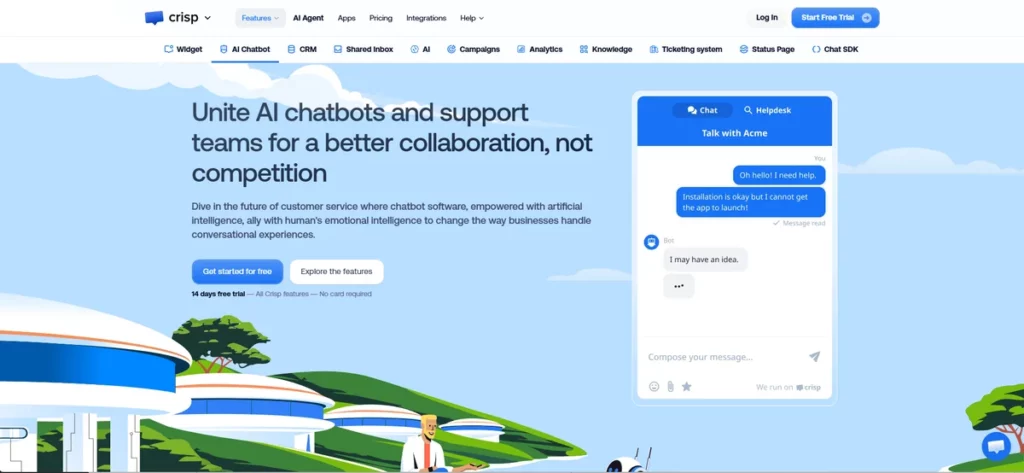
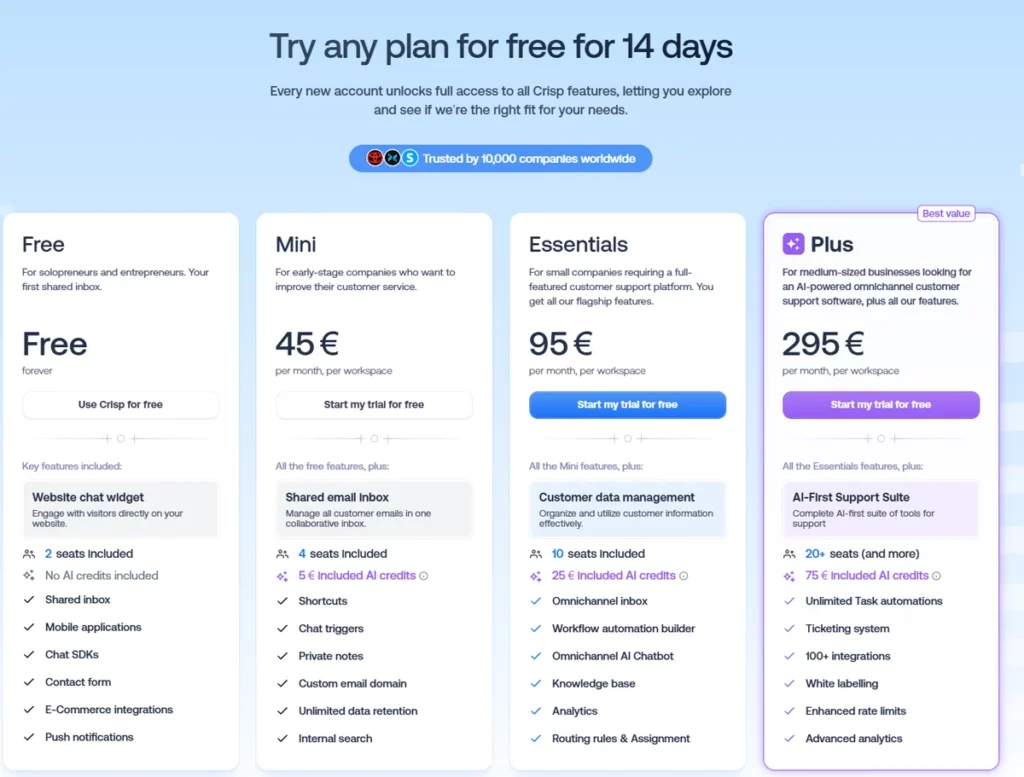
🔵 Verified from documentation. Crisp is a French customer-messaging platform with a strong GDPR posture: it hosts data in EU datacentres, offers a data-processing agreement, and provides built-in tools for data export, deletion (right to be forgotten) and consent management. It bundles live chat, chatbots, a knowledge base and a CRM, and prices per workspace at a flat rate rather than per agent, which keeps costs predictable for a small team.
Best for: European businesses that want an affordable all-in-one with a European data base. Watch for: its AI features are gated to the higher plans rather than core, and it is support-focused more than sales-focused. Two things to confirm before you rely on it for strict residency: the exact EU region your data sits in, and whether EU hosting applies to your specific plan, since some reporting ties it to a particular tier. European-language quality is worth testing on your own text. Pricing: free tier, then from around 45 euros a month (Mini) per workspace. Verdict: 🟢 Strong EU-hosted pick; confirm the plan-level residency detail.
Tidio 🇵🇱 (Poland): the e-commerce option, but mind the AI pricing
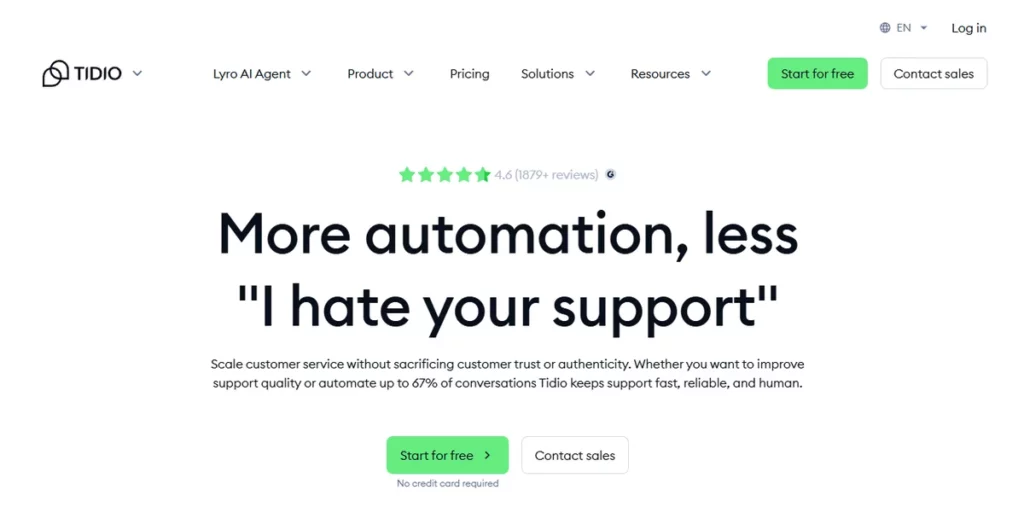
🔵 Verified from documentation. Tidio is a popular independent Polish platform (founded 2013 in Szczecin), especially strong for e-commerce, with native Shopify and WooCommerce integrations, a genuine free tier, and a fast setup. Its Lyro AI agent is notable for running on Anthropic’s Claude, which tends to handle European languages more naturally than most, and it officially supports around a dozen languages including German, French, Spanish, Italian, Portuguese, Dutch and Polish.
The honest catch is the pricing. If you are a small business, you can try it out at least, but no Lyro AI conversations for 0€.
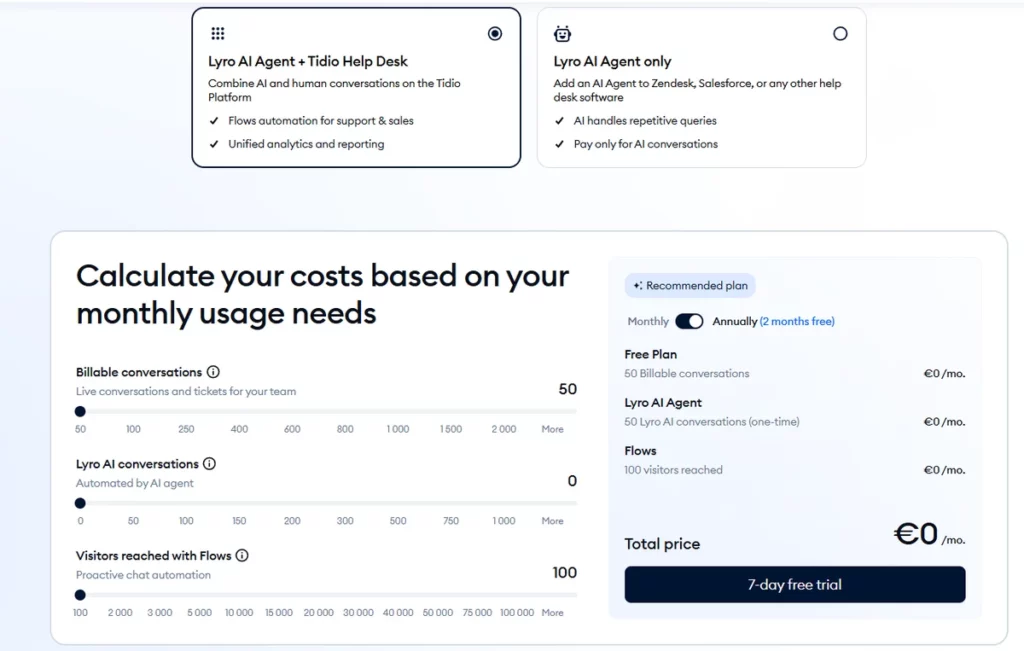
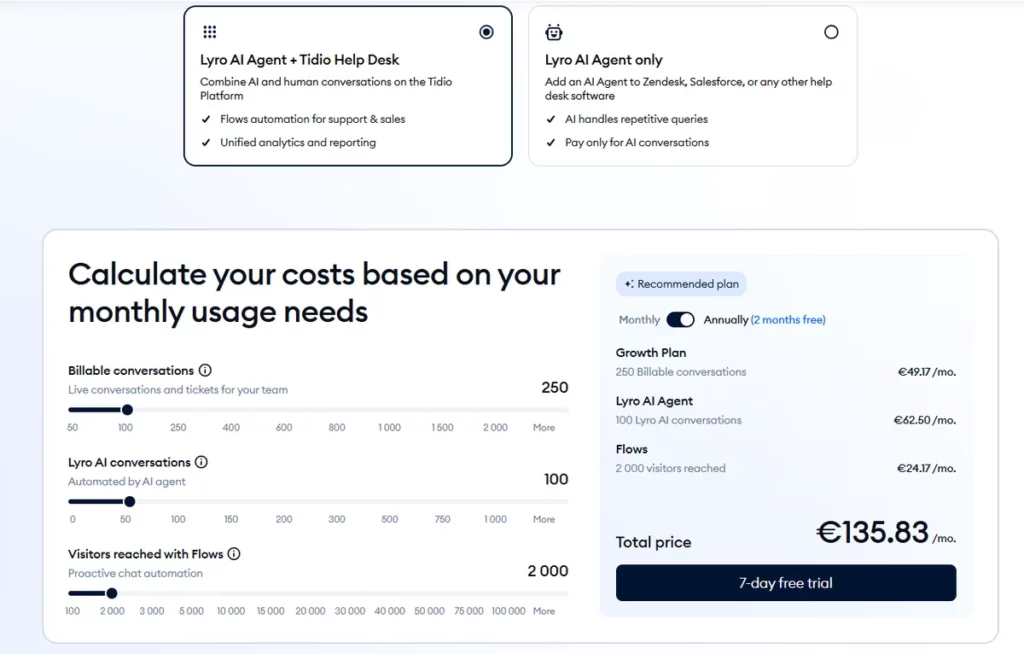
One sovereignty nuance worth knowing: because Lyro runs on Claude (a US provider), AI conversations may be processed outside the EU even if Tidio’s own hosting is European. Confirm both your language and the data flow if that matters to you. Best for: European e-commerce shops wanting easy automation, that can budget for the AI add-on. Watch for: the real cost of AI, the auto-upgrade behaviour, and the US AI-processing nuance. Verdict: 🟢 Strong for e-commerce; 🟡 mind the AI pricing.
Userlike, now Lime Connect 🇩🇪 (Germany): the German-hosted pick
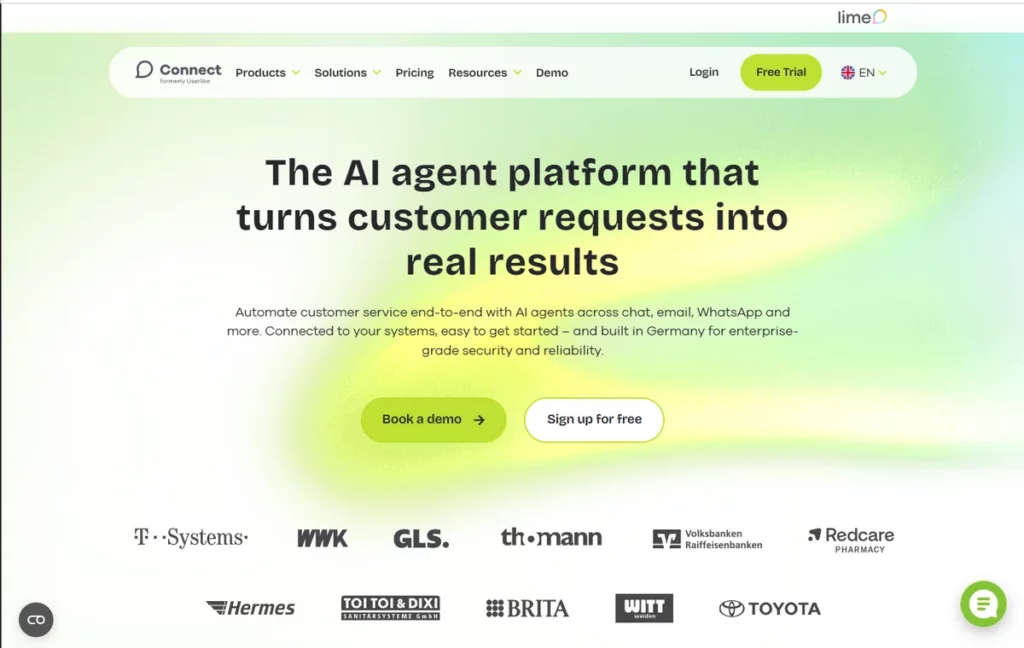
🔵 Verified from documentation. Userlike, which rebranded to Lime Connect in 2026, is a German customer-communication platform built around a strong GDPR focus, with all data stored on servers in Germany. That German hosting is one of the clearest data-residency signals you can get. It combines website chat, native WhatsApp and multichannel messaging, AI agents and an agent copilot, and it is used by large brands such as Toyota and Nivea, so it scales from small teams upward.
Best for: European businesses, especially in Germany and the wider DACH region, that want German data hosting and strong WhatsApp-first messaging. Watch for: the rebrand can cause confusion (you may see it under either name), and its entry pricing is higher than Crisp or Tidio, starting around 90 to 100 euros a month with a small seat minimum, so confirm the current tiers. European-language quality is still worth testing on your own text. Verdict: 🟢 Strong pick where German or strict EU hosting is the priority.
The powerful US contrast
Intercom 🇺🇸 (US): the broadest capability, with a US caveat
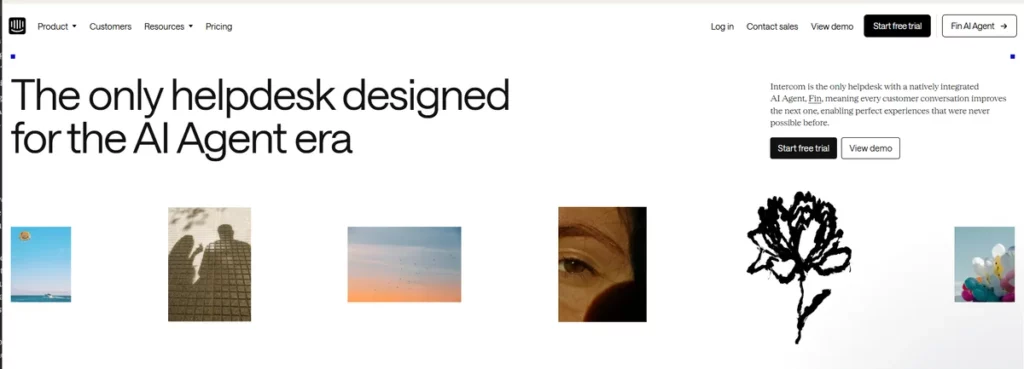
🔵 Verified from documentation. Credit where due: Intercom is a polished, capable platform, widely rated best-in-class for in-app and SaaS support, its Fin AI agent has very broad language coverage, and Fin can run on EU-hosted workspaces with data processed in Europe. So the old “US tool, keeps your data in America” objection does not straightforwardly apply, since you can keep the data in the EU.
The remaining considerations are corporate and financial, not technical. First, jurisdiction: Intercom is US-headquartered, and as of mid-2026 it is being acquired by Salesforce, another US company. Even with EU data hosting, some European data protection officers weigh the possibility of US legal reach over a US parent (the CLOUD Act question). Whether that matters is a judgement call for your business. Second, cost: Intercom prices per seat (around 29, 85 and 132 dollars per seat on annual billing), with EU hosting available only from the Advanced plan upward, and its Fin AI billed separately at about 99 cents per resolved conversation on top. That two-layer model is hard to budget and climbs fast.
Best for: well-funded teams wanting the broadest capability, comfortable with a US parent and an EU-hosted workspace. Watch for: the US-parent question if your governance is strict, EU hosting gated to a pricier plan, and unpredictable per-resolution AI billing. Verdict: 🟡 Very capable and EU-hostable, but weigh the US-parent question and the cost.
One more for larger organisations: if you are an enterprise rather than an SMB, Cognigy (Germany) is the notable European heavyweight, a Dusseldorf company strong in conversational and voice AI with on-premise options and ISO 27001 certification. It is powerful but enterprise-priced and slow to deploy, so it is overkill for most small businesses.
At a glance
| Tool | Origin | EU data hosting | Language coverage | Best for | Verdict |
|---|---|---|---|---|---|
| Crisp 🇫🇷 | France | EU datacentres (confirm plan/region) | Broad, test your own | Strict EU residency, flat pricing | 🟢 |
| Tidio 🇵🇱 | Poland | EU options; Lyro AI runs on Claude (US) | ~12 languages incl. DE, FR, ES, NL | Affordable e-commerce | 🟢 / 🟡 on AI cost |
| Userlike / Lime Connect 🇩🇪 | Germany | Hosted in Germany | Broad, test your own | German hosting, WhatsApp-first | 🟢 |
| Intercom 🇺🇸 | US (now Salesforce) | EU-hostable (Advanced plan up) | Very broad | Broadest capability, deeper budgets | 🟡 (US parent, cost) |
Assessments are from each vendor’s published documentation (verified 30th of July 2026). Language coverage lists tell you what is officially supported, not how natural it reads, so always test your own real customer text. Confirm current hosting region, plan-level residency, and DPA terms before you commit.
The EU AI Act rule you cannot skip
If you deploy a customer-facing chatbot, the EU AI Act’s transparency rules apply: you must make clear to people when they are interacting with an AI rather than a human. This is not optional, and it is a low bar to meet (a simple “you are chatting with our AI assistant” does it), but it is a real obligation.
We cover what the AI Act means for a normal European business, in plain terms, in our EU AI Act guide. The short version: for most businesses the duties are light, and being transparent about your chatbot is one of the few that genuinely applies to nearly everyone.
How this connects to your wider setup
A chatbot is one more tool touching customer personal data, so where it stores that data sits alongside every other tool choice. We cover data residency across AI tools in our EU data residency guide. And if you want the chatbot to trigger actions in your accounting or CRM, see how AI connects to the European business stack.
Frequently asked questions
Which AI chatbot keeps customer data in the EU? Crisp (French, EU datacentres) and Userlike, now Lime Connect (German-hosted), are the strongest here. Tidio offers EU hosting (confirm your region), and Intercom can run on EU-hosted workspaces too. The difference with Intercom is that it is US-headquartered, which is a separate consideration from where the data physically sits.
Do I have to tell customers they are talking to an AI? Yes. Under the EU AI Act, you must be transparent when customers interact with an AI chatbot. A simple notice does the job, but it is a real obligation.
Which chatbot handles European languages best? It depends on your language, and vendor lists only tell you what is officially supported. Tidio’s Lyro (powered by Claude) and Intercom’s Fin both cover many European languages; Crisp and Userlike are European-built. Whichever you consider, test its output on your own real customer questions before going live, because officially supported does not always mean natural.
Is Intercom a bad choice for a European business? No, it is genuinely capable and can be EU-hosted. The things to weigh are that it is US-headquartered (now being acquired by Salesforce), its EU hosting sits on a pricier plan, and its per-resolution AI billing gets expensive. If a US parent is not a concern for your data governance and the budget fits, it is a strong option.
What is the cheapest way to get an AI chatbot? Tidio and Crisp both have genuine free tiers to start. Just note that meaningful AI on Tidio is a paid add-on rather than part of the cheap plan, so the real cost of automated answers is higher than the headline price.
Can these chatbots really handle complex questions? Modern AI chatbots handle a lot, but plan for a human handoff on complex cases, and always test the local-language quality on your own real customer questions before going live.
Keeping this up to date
Chatbot features, pricing, hosting and even company ownership change often (Intercom is mid-acquisition, and Userlike has rebranded to Lime Connect), and the AI Act’s rules are still settling. We verify against current documentation and date this. Last reviewed 30th of July 2026. If something has changed, tell us.
Sources
- Crisp is a French platform hosting in EU datacentres with a DPA and GDPR tooling; flat per-workspace pricing. Crisp: https://crisp.chat/ (and pricing/security pages)
- Tidio is an independent Polish platform; Lyro AI runs on Anthropic’s Claude and is a separate paid add-on above the base plans. Tidio: https://www.tidio.com/
- Userlike (now Lime Connect) is a German platform storing data on servers in Germany. Lime Connect (formerly Userlike): https://www.userlike.com/
- Intercom is US-headquartered, offers EU data hosting on higher tiers, prices Fin AI per resolution, and agreed to be acquired by Salesforce in 2026. Intercom: https://www.intercom.com/
- The EU AI Act requires transparency when users interact with an AI system. European Commission, AI Act: https://digital-strategy.ec.europa.eu/en/policies/regulatory-framework-ai
Last reviewed 30th of July 2026. Assessments are based on each vendor’s published information (🔵), in line with our published methodology. European-language quality should be verified by hands-on testing, which we recommend before you commit. Pricing, plans, hosting and ownership change, and we update this guide as they do.